
What an Engineering Handoff Should Contain
A practical guide to the requirements, architecture, decisions, evidence, and open conditions that make a handoff useful to engineering.

On this page
A handoff can contain a project brief, a polished architecture diagram, and a long backlog while leaving engineering unable to answer a basic question: what can we safely assume?
The missing information usually sits between those artifacts. A requirement was narrowed during review. An integration was chosen on the condition that another team would own recovery. An exception was accepted for the first release, with follow-up work expected later. If those decisions do not travel with the package, engineering has to discover them again.
A useful handoff makes the intended behavior and the basis for building it easy to inspect. The following structure is a practical review guide, not a claim that every project needs the same documents.
Start with the outcome and its boundary
State the user or business outcome, what is included, and what is excluded. Name the owner of the outcome and explain how acceptance will be assessed. Scope should be specific enough to help a team refuse adjacent work that has not been considered.
For an illustrative customer-address initiative, the outcome might be accepting an authenticated customer's change request and showing its status. Changing account ownership is outside the boundary. That distinction affects interface design, authorization, and testing; it belongs in the requirements rather than in a meeting attendee's memory.
Connect requirements to observable behavior
“Support address changes” does not tell an engineer what happens when a downstream system is unavailable. A useful requirement describes the expected behavior and the conditions in which it applies.
Include failure cases alongside the normal flow. What should the user see when an update is pending? What happens when the same request arrives again? Who can act on an unresolved exception? Acceptance criteria should let an engineer and reviewer reach the same conclusion from the same result.
Keep the source of each material requirement accessible. A stakeholder request, an internal standard, and an inference from existing code carry different kinds of authority. Treating them as interchangeable makes later changes harder to assess.
Show the architecture choices, not only the diagram
A diagram identifies components and connections. The handoff also needs the decisions that explain those connections: system ownership, data boundaries, integration behavior, failure recovery, and the alternatives rejected.
In the address example, asynchronous propagation may let the request be accepted while a downstream service is unavailable. It also creates pending states and recovery work. Both consequences need to reach the backlog. A rationale that mentions only the advantage is incomplete for implementation purposes.
Preserve the meaning of review
Record who reviewed the design, what evidence they considered, and what the decision permits. Distinguish approval to continue design, approval of an architecture choice, and authorization for a release.
Conditions need an owner and a point at which they must be resolved. “Recovery procedure to be confirmed” is useful only if the handoff says who will confirm it and what work depends on that confirmation. Engineering may be able to build part of the solution while another part remains gated.
A compact handoff example
For the illustrative address-change workflow, a review summary could read:
- Outcome: customers can submit a change and see its current status.
- Boundary: the customer service owns the accepted address; downstream consumers apply the change to their own records.
- Decision: publish accepted changes for downstream processing rather than requiring every consumer to respond before acceptance.
- Rationale: a consumer outage must not prevent accepting the request; delayed propagation must remain visible.
- Engineering work: persist the request, publish the change, display pending status, and provide recovery handling.
- Evidence: interface documentation, stakeholder confirmation of ownership, and review of the proposed failure flow.
- Open condition: the service owner must approve the recovery procedure before the release decision.
The full package would contain more detail. The summary is valuable because it connects details that would otherwise sit in separate files.
Check the handoff by changing something
Before accepting a package, ask a reviewer to change one assumption. Suppose the downstream service can no longer accept delayed updates. Can the team locate the affected architecture choice, requirements, tests, and delivery tasks without searching a series of meeting notes?
Then ask an engineer unfamiliar with the discussion to explain the recovery behavior. If the explanation depends on a person filling in gaps verbally, capture those gaps before calling the handoff complete.
Archangel's workflow connects requirements, architecture, decisions, review actions, compliance evidence, and delivery planning. That connection is what makes a package useful beyond its first presentation. The acceptance test is practical: can engineering act on it, can a reviewer challenge it, and can both see what a change would affect?
Continue reading
All resources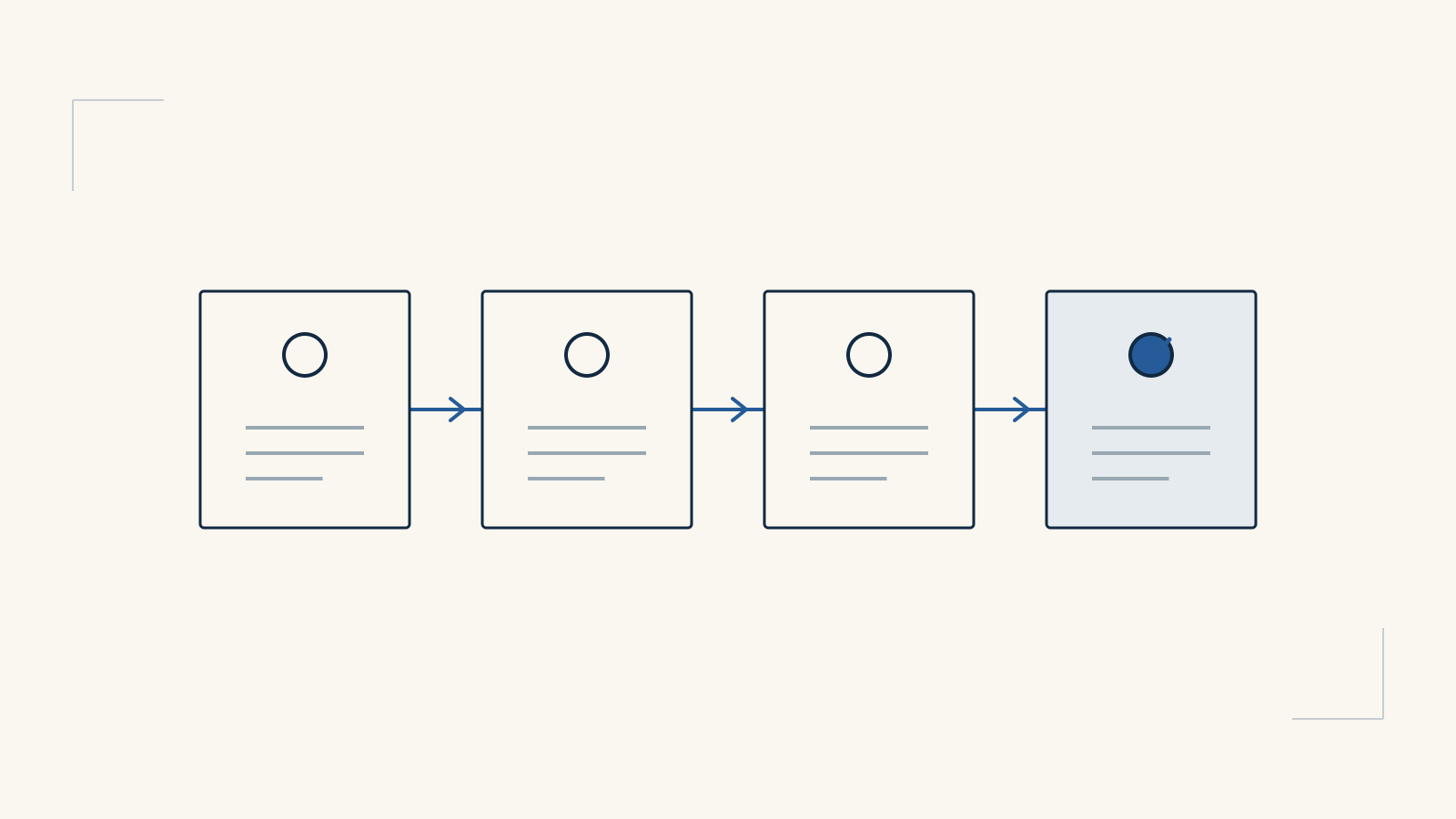
Architecture & Delivery
AI Made Coding Faster. What Gets an Initiative Ready to Build?
Follow an initiative from a business request to requirements, architecture, and reviewable work an engineering team can take forward.
Decision Trace & Evidence
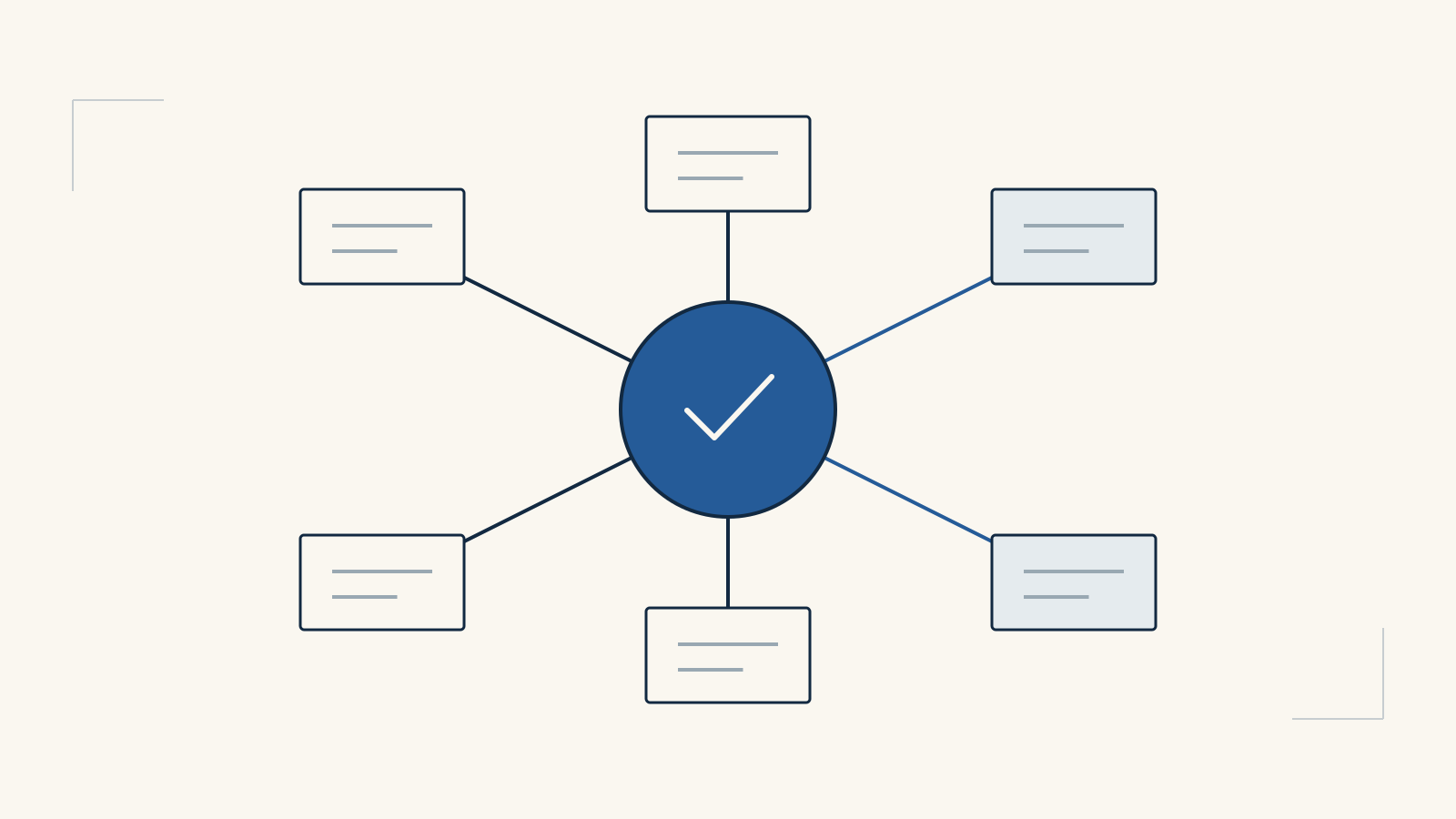
Decision Trace: What to Record Before the Reasoning Disappears
Walk through an architecture choice and the observations, constraints, options, rationale, and review that make it understandable later.
Architecture & Delivery
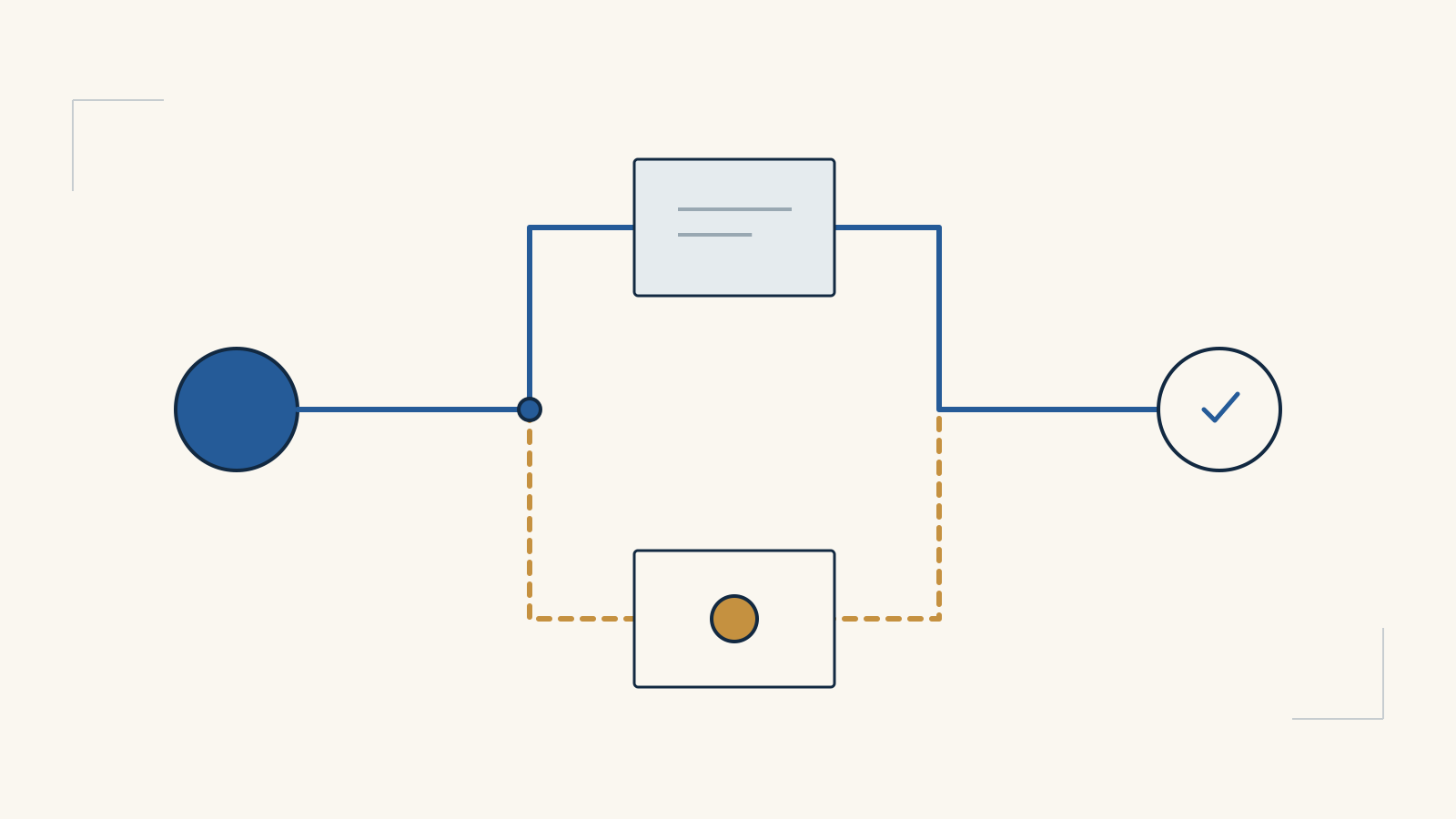
When the Build Moves Away From the Approved Architecture
Follow an implementation change from a detected deviation to a decision: restore the build, revise the design, or resolve a missing fact.
From reading to review
Bring one real initiative.
See how Archangel connects requirements, architecture decisions, and engineering work.